
April is National Social Security Month — Here’s a Little History Lesson
April is National Social Security Month so this seems like the perfect time to take a deep dive in how this program came about.
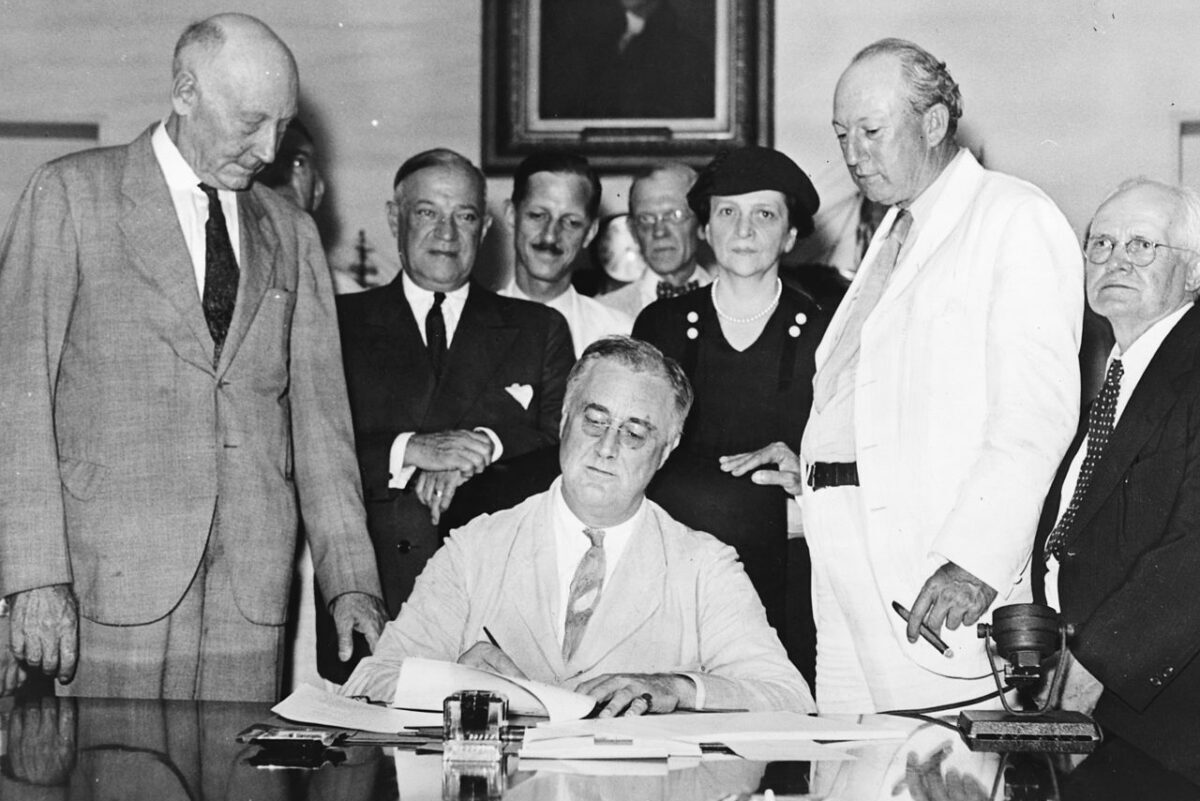
It’s pretty common knowledge that President Franklin D. Roosevelt created Social Security when he signed the Social Security Act into law in 1935. Social Security was to serve as a federal safety net for elderly, unemployed and disadvantage Americans.
Roosevelt’s Radical Idea
Prior to President Roosevelt’s term in office, most social assistance plans in America were dependent on the government, charities and private citizens doling out money to people in need. He proposed a program in which people contributed to their own future economic security by contributing a portion of their work income through payroll tax deductions. This was more in line with Europe’s economic security rulebook.
Basically, under President Roosevelt’s plan, the current working generation would pay into the program and finance the retired generation’s monthly allowance.
The Social Security Act
In June 1934, President Roosevelt created the Committee on Economic Security (CES), which was led by the first woman to hold a U.S. Cabinet post, Secretary of Labor Frances Perkins. The CES drafted the Social Security Act. It gave people economic security throughout their lives.
After much debate, Congress passed the Social Security Act to provide benefits to retirees based on their earnings history and on August 14, 1935, President Roosevelt signed it into law.
Medicare & COLA
Social Security has seen many amendments over the years, but the two most significant might be the creation of Medicare and establishing a cost-of-living adjustment (COLA).
The Social Security Amendments of 1965 provided medical insurance to Social Security beneficiaries age 65 and older. This new “Medicare” program also offered people 65 and older the chance to purchase supplemental medical insurance.
In 1972, President Richard M. Nixon signed legislation to provide an automatic cost of living allowance each year to offset the cost of inflation. Prior to the new law, annual increases required Congressional approval. This year, retirees saw the biggest COLA increase in about 40 years — 5.9 percent — and next year’s could be even higher due to the record-high inflation we are currently experiencing.
Social Security Reform
Despite attempts to keep it solvent, the Social Security program faces a major long-term shortfall. If nothing changes, its Trust Fund could be depleted in about 10 years.
The Seniors Trust believes lawmakers need to act right now to shore up the long-term solvency of Social Security. It wants Congress to pass the Social Security Expansion Act. This landmark piece of legislation would raise additional revenue by eliminating the income cap for social security tax.
This year the annual wage cap limit is $147,000. Taxes are only collected on income up to $147,000 — anything above that is not taxed. Many people believe this is not fair because a person earning $147,000 pays the same amount in taxes as someone making $500,000 or millions. The Social Security Expansion Act calls for lifting the cap on Social Security taxes to ensure that the wealthiest Americans pay a fairer amount in relation to their income. The bill’s sponsors say doing so would “extend the solvency of Social Security for about 52 years to the year 2071.”